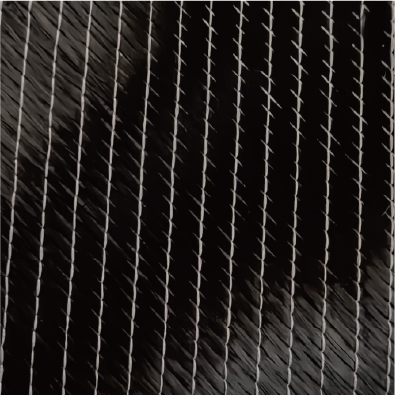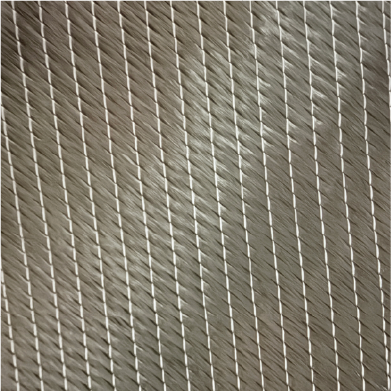
Type | Vinyl Sizing Agent | Conventional Epoxy-BasedSizing Agent |
Interfacial BondingStrength | Interlaminar shear strength ≥ 60 MPa (with vinylester resin), representing an improvement of over50% compared with epoxy-based systems | Good compatibility with epoxy resin (interlaminar shear strength approx. 50–60 MPa), but poor bonding with vinyl ester resin (≤ 50 MPa) |
Corrosion Resistance | Resistant to strong acids and alkalis (pH 1–14)and salt spray (service life ≥ 20 years), suitablefor marine vessels and chemical equipment | Moderate resistance to acids and alkalis |
Process Compatibility | Compatible with the rapid curing of vinyl esterresins | Requires stepwise ring-opening polymerization,resulting in a longer curing time |
Environmenta lFriendliness | Water-based system (solid content 0.25–1%),with low VOC emissions | Solvent-based system (containing organic solvents),with higher environmental impact |
Resistance toHygrothermal Aging | Strength retention > 90% at 95% humidityand 80 °C | Prone to delamination in hygrothermal environments(strength reduction > 30%) |
*Vinyl Sizing Agent vs. Conventional Epoxy-Based Sizing Agent | ||
Fiber Type | Sizing Agent Type | Tensile Strength | Tensile Modulus | Fiber Density | TEX | Sizing Content | |||
MPa | Ksl | Kgf/mm² | Gpa | Msl | (g/cm3) | (g/km) | (%) | ||
12K | Vinyl | 5,786 | 839 | 590 | 247 | 35.8 | 1.8 | 800 | 1.2 |
Batch No. | Interlaminar Shear Strength | Flexural Strength | Flexural Modulus | Boiling Water Flexural Strength | Boiling Water Flexural Modulus | Tensile Strength | Tensile Elastic Modulus | Compressive Strength |
(Mpa) | (Mpa) | (Gpa) | (Mpa) | (Gpa) | (Mpa) | Gpa) | (Mpa) | |
Batch 1 | 55.32 | 739.41 | 50.29 | 632.57 | 48.35 | 993.50 | 59.07 | 326.3 |
Batch 2 | 54.21 | 684.7 | 50.62 | 627.42 | 49.66 | 851.70 | 57.03 | 285.1 |
Batch 3 | 60.3 | 715.2 | 53.15 | 689.10 | 47.27 | 950.8 | 59.72 | 260.8 |



 EN_GB
EN_GB  RU_RU
RU_RU  ZH
ZH  FR
FR